
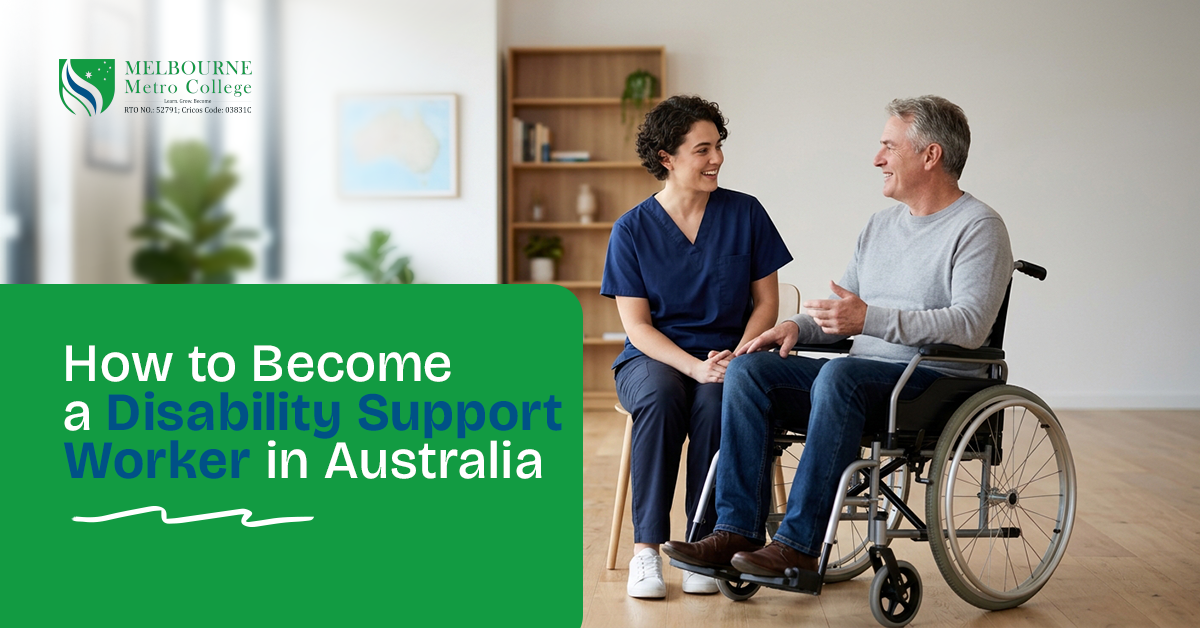
Tobecome a disability support worker in Australia, there is no single mandatory pathway for every role. A common route is to understand the work, consider relevant training such asCHC33021 Certificate III in Individual Support, gain practical experience, meet role-specific requirements and prepare for your first disability support job.
The best starting point depends on your experience, the type of support work you want to do and the requirements of the roles you are considering.
Key Takeaways
- You do not need one specific qualification to enter every disability support worker role in Australia.
- CHC33021 Certificate III in Individual Support is a common vocational training pathway.
- CHC33021 requires candidates to complete at least 120 hours of work under the qualification’s assessment requirements.
- Practical experience can help you understand real workplace expectations before applying for your first role.
- Employment checks and certificates vary by role, employer and work setting.
- Workers with registered NDIS providers in certain risk-assessed roles need an NDIS Worker Screening clearance.
What Does a Disability Support Worker Do?
Adisability support worker helps people with disability participate in everyday life while supporting their independence, choices and individual goals. Depending on the role, this can include personal care, daily activities, individualised support and community participation.
Workers may provide support in a participant’s home, in the community, through centre-based programs or in supported living arrangements.
How to Become a Disability Support Worker in Australia: 6 Steps
Step 1: Understand the Role and Type of Support Work
Start by exploring what disability support work involves and which work environment interests you.
Look at current job descriptions and consider:
- where the support is delivered
- who you may be supporting
- whether personal care is involved
- what experience the employer asks for
- whether qualifications or specific checks are listed
This helps you make a more informed decision about training and the types of entry-level roles to target.
Step 2: Consider Relevant Disability Support Training
There is no formal qualification required to start every disability-sector job. However, employers may prefer or require relevant training for particular roles, according to the Victorian Government’sStart your disability career guidance.There is no formal qualification required to start every disability-sector job. However, employers may prefer or require relevant training for particular roles.
One common pathway isCHC33021 Certificate III in Individual Support, particularly with a disability specialisation. The nationally recognised qualification reflects person-centred support delivered under supervision and according to an individualised plan. Candidates must completeat least 120 hours of work under the qualification’s assessment requirements.
When comparing training, choose aRegistered Training Organisation (RTO) and check current qualification information onTraining.gov.au.
Step 3: Gain Practical Experience
Practical experience can help bridge the gap between learning about disability support and working in a real support environment.
Work placement may help you:
- observe experienced workers
- understand workplace routines
- apply person-centred support principles
- communicate in professional settings
- become familiar with individual support needs
- build confidence before applying for paid work
If you have no direct disability-sector experience, previous work in community services, customer service, care, education or other people-focused environments may also demonstrate transferable experience.
It does not replace role-specific training or requirements, but it can help show employers that you already understand responsibility, communication and working with others.
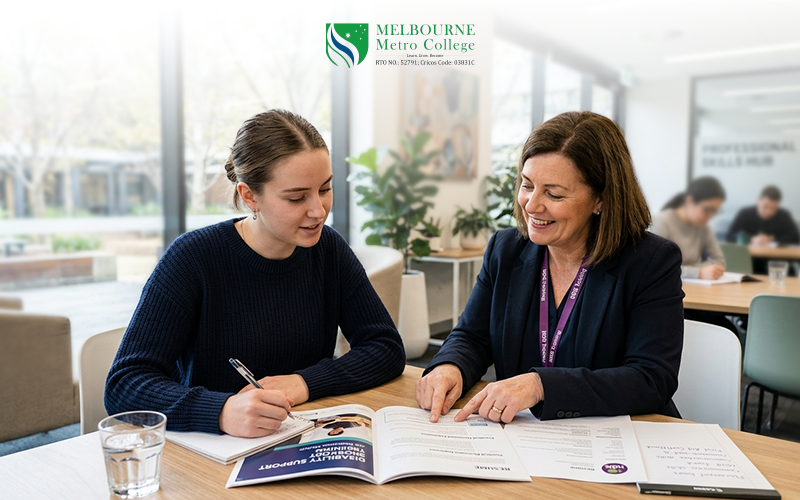
Step 4: Prepare for the Requirements of the Role
Before applying, check each job advertisement carefully because disability support worker requirements are not identical across all positions.
Employers may ask for items such as:
- First Aid and CPR
- a Working with Children Check where relevant
- police or background checks
- a current driver’s licence
- NDIS Worker Screening where applicable
For registered NDIS providers, people working inrisk-assessed roles generally need anNDIS Worker Screening clearance. These roles can include direct delivery of specified supports or work involving more than incidental contact with people with disability.
For a full explanation, read MMC’s guide toNDIS support worker requirements in Australiarather than treating one checklist as applicable to every job.
Step 5: Prepare Your Resume and Interview Examples
When applying for your first disability support worker job, make it easy for an employer to understand how your background relates to the position.
Your resume can highlight:
- relevant training or qualifications
- practical placement
- relevant certificates or checks
- volunteer or community experience
- previous people-focused work
- examples of responsibility and teamwork
Do not simply list certificates.
During an interview, be ready to explain how you would listen to a person, respect their choices, follow workplace procedures and ask for guidance when a situation falls outside your role.
These practical examples can demonstrate your understanding ofperson-centred support without trying to present yourself as more experienced than you are.
Step 6: Apply for Your First Disability Support Worker Role
Once you are ready, search for roles through disability service providers, community organisations, employer career pages and major job platforms.
Useful search terms can include:
- disability support worker
- support worker
- community support worker
- NDIS support worker
Can You Become a Disability Support Worker With No Experience?
Yes. Some people enter disability support without previous industry experience.
If you are starting from zero, focus on building evidence that you are prepared for the role:
- Learn what disability support work involves.
- Consider relevant vocational training.
- Gain supervised practical experience.
- Complete the requirements relevant to the jobs you want.
- Prepare a focused resume.
- Apply for suitable entry-level positions.
Starting without disability-sector experience does not necessarily mean starting without useful experience. Communication, community involvement and other people-facing work can provide transferable strengths.
How Do You Get Your First Disability Support Worker Job?
Getting your first role is about connecting your preparation to what an employer actually needs.
Instead of sending the same application everywhere:”
- target suitable entry-level positions
- highlight relevant work placement
- mention completed checks where requested
- tailor your resume to the job description
- prepare examples for common interview situations
Your aim is to show that you understand professional support work and are ready to continue learning in the workplace.
What Should You Look for in Your First Disability Support Role?
Getting a job is important, but your first workplace should also give you a good environment in which to develop professionally.
Look for:
- clear induction and onboarding
- clearly defined duties
- access to experienced supervisors or team members
- workplace policies and procedures
- opportunities for ongoing learning
- realistic expectations for new workers
- clear guidance on who to contact when you need help
During an interview, asking how new workers are supported can tell you a lot about the workplace.
A structured environment can be particularly valuable when you are entering the disability services sector for the first time.
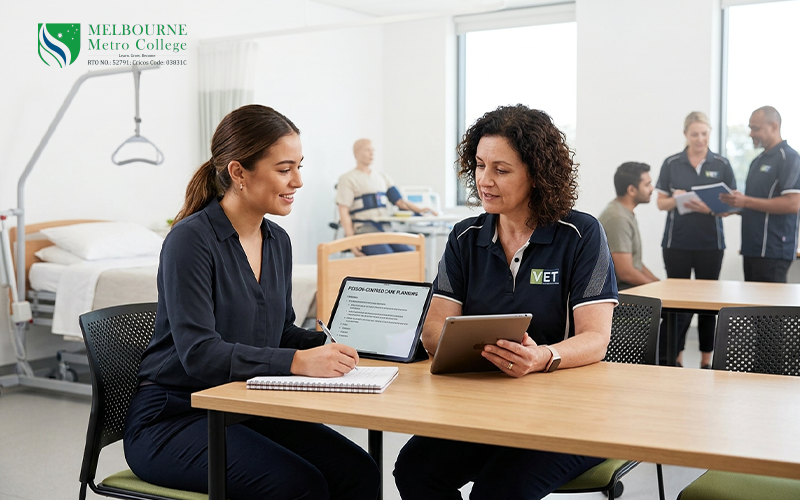
Can You Work Independently as a Disability Support Worker?
Disability support workers may work for provider organisations, be engaged directly by participants or work independently. Independent work can involve additional business, insurance, tax and administrative responsibilities.
For beginners, an established organisation may provide useful induction, supervision and workplace support.
How Long Does It Take to Become a Disability Support Worker?
There is no universal timeframe forbecoming a disability support worker.
It can depend on:
- whether you undertake formal training
- the duration of your chosen course
- required work placement
- your previous experience
- role-specific checks
- recruitment timelines
Rather than focusing only on speed, focus on being adequately prepared for the responsibilities of the position you want.
What Can You Do After Gaining Experience?
After gaining experience, you may consider further learning or broader responsibilities. For eligible learners,CHC43121 Certificate IV in Disability Support is one further-study option.
Learn more in MMC’s guide.
Frequently Asked Questions
Do You Need a Qualification to Become a Disability Support Worker?
Not for every role. There is no single formal qualification required to begin every disability-sector job, although individual employers may prefer or require relevant training.CHC33021 Certificate III in Individual Support is a common vocational pathway.
What Course Can Help You Start in Disability Support?
CHC33021 Certificate III in Individual Support, particularly with a disability specialisation, is one recognised training option for people preparing for individual and disability support work.
Can You Become a Disability Support Worker With No Experience?
Yes, depending on the position and employer. Relevant training, supervised placement and transferable experience can help you prepare for entry-level disability support work.
How Do You Find Your First Disability Support Worker Job?
Search disability service providers, employer career pages and major job platforms. Focus on entry-level roles and tailor each application to the duties, experience and requirements listed by the employer.
Can International Students Work as Disability Support Workers in Australia?
International students may be able to study and work in disability support if their visa conditions allow it and they meet the employer’s requirements. Students should always check theircurrent work rights and individual visa conditions before accepting employment.
Start Your Disability Support Training in Melbourne
If you are considering a structured entry into disability support,CHC33021 Certificate III in Individual Support can help you develop foundational knowledge and practical workplace experience.
